Cabinet Finishes That Hold Up Daily
Trim and Cabinet Painting in Raleigh for surfaces with chipping finish, outdated color, or wear from regular contact
Painted cabinet doors accumulate visible wear differently than walls—the finish breaks down at edges, around hardware, and along door stiles where hands make repeated contact. D & B Painting and Drywall handles kitchen and bathroom cabinet painting, along with baseboards, molding, doors, and trim work throughout Raleigh, using preparation and finishing processes designed for high-contact surfaces. Cabinet and trim refinishing is a practical alternative to full replacement when the underlying structure is sound but the existing finish has deteriorated or no longer matches the space.
The reason cabinet painting fails prematurely in many cases comes down to inadequate deglossing and priming before color is applied. Kitchen cabinet surfaces accumulate grease residue that prevents paint adhesion even when the surface looks clean to the eye—without chemical degreasing and light abrasion, a new coat of paint will peel from the edges within months of application. Doors and drawer fronts are typically removed for flat-surface finishing, which eliminates the sag and run marks that result from painting vertical surfaces in place with brush application.
Request an assessment of your cabinet and trim surfaces to determine the preparation scope and finish options available for your space.
The Difference Between Proper and Rushed Cabinet Work
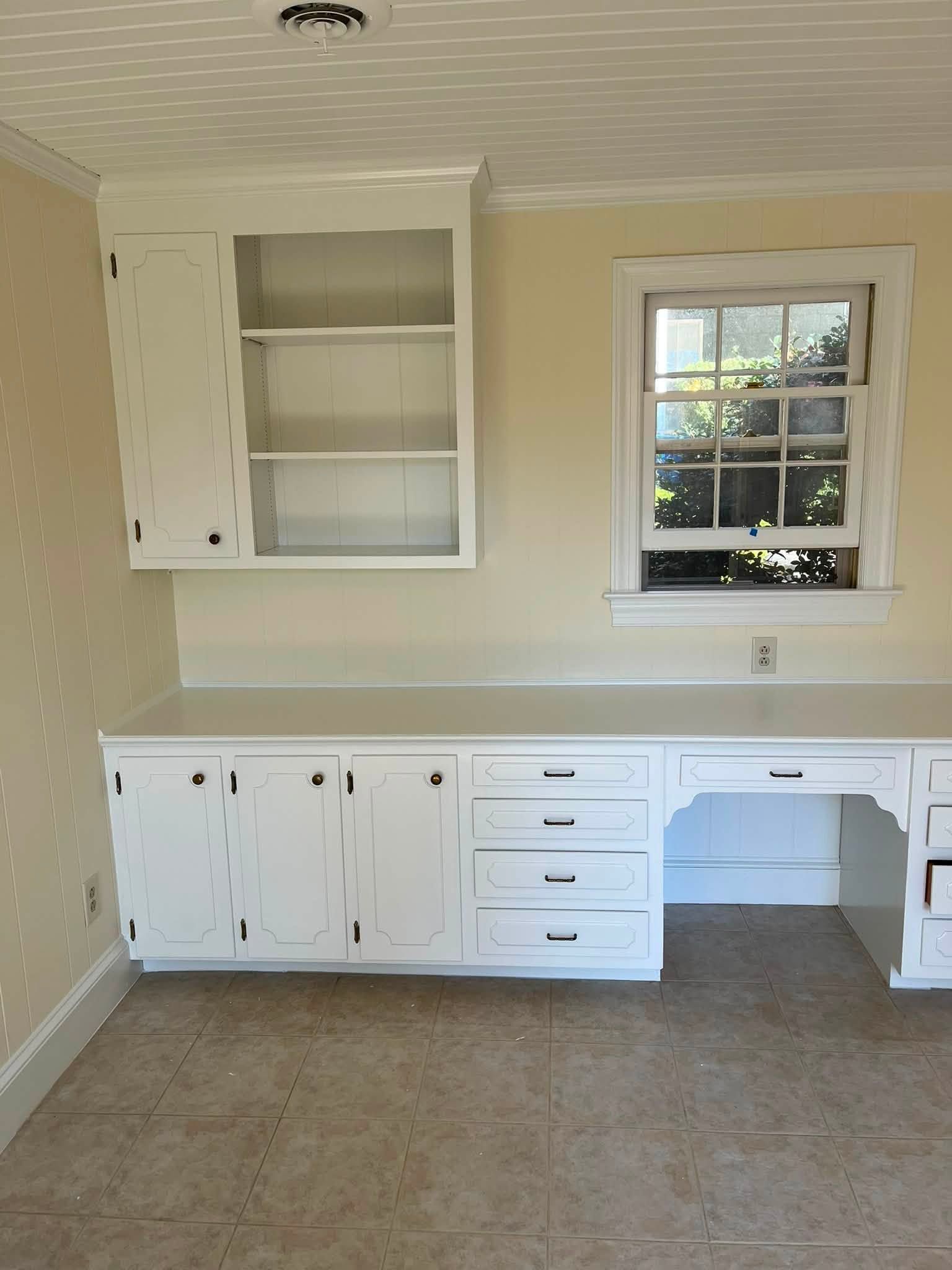
Cabinet painting done correctly involves several distinct phases: hardware removal, surface cleaning and deglossing, sanding to create mechanical adhesion, priming with a product formulated for slick or previously finished surfaces, and applying finish coats in a controlled environment that minimizes dust contamination. The finish product used on cabinets should be selected for hardness and cleanability, not just color—trim enamels and cabinet-specific topcoats cure to a harder film than standard wall paint, which is why using the wrong product produces a surface that scratches and marks easily.
Once cabinet and trim painting is complete, the change is visible in the consistency of sheen across all surfaces, the absence of brush marks on flat door panels, and the durability of finish at edges and corners where previous wear was most apparent. Baseboards and door trim painted correctly show clean lines at floor and wall transitions with no bleed-through from underlying color or grain.
The scope of a trim and cabinet project also involves decisions about hardware—whether existing pulls and hinges are reused or replaced affects the finishing approach, particularly when hardware holes need to be filled or relocated. Refinishing includes the cabinet boxes and frames in addition to doors and drawer fronts, since painting only the doors while leaving frames in original finish produces a visible mismatch in sheen and color.
Questions Before Starting Your Project
Cabinet and trim painting questions often center on durability, preparation requirements, and how the finished result compares to replacement—particularly for kitchen cabinets that take significant daily use.
Why do painted cabinets sometimes chip within the first year?
Early chipping almost always traces back to skipped deglossing or inadequate priming, which means the finish coat never fully bonded to the substrate—proper preparation is the single factor that most determines how long a painted cabinet finish lasts.
How are cabinet doors finished to avoid brush marks and drips?
Doors are typically removed and finished horizontally, which allows the product to self-level across the panel surface, and spray or roller application is used on flat sections to achieve a smooth, even film.
What type of paint product works best on kitchen cabinets?
Cabinet-specific enamels or alkyd-hybrid formulations cure to a harder film than latex wall paint, making them more resistant to moisture, grease, and daily cleaning—the choice of product matters as much as the application method.
How does Raleigh's humidity affect cabinet painting?
High humidity slows cure times and can affect how paint levels out during application, which is why timing finishing coats during lower-humidity periods produces a cleaner result and reduces the risk of blush or cloudiness in the finish film.
What maintenance does a painted cabinet surface require after completion?
Painted cabinets should be cleaned with mild, non-abrasive solutions, and any chips at edges should be addressed promptly before moisture works beneath the finish film and causes the damage to spread.
D & B Painting and Drywall can evaluate the current condition of your cabinets and trim surfaces and outline the preparation and finishing work required to produce a durable result. Contact the office at (919) 215-3600 to schedule an estimate.