Repairs That Disappear Into the Wall
Drywall Services in Raleigh for surfaces with holes, water damage, settling cracks, or texture inconsistencies that need to be paint-ready
A poorly patched drywall repair is visible under any lighting condition—the patch edges telegraph through paint as ridges, the texture doesn't match the surrounding wall, and the repair draws attention rather than disappearing. D & B Painting and Drywall provides drywall installation, repair, patching, finishing, and surface preparation work in Raleigh for homeowners dealing with holes, cracks, water damage, or surfaces that need to be brought to a paint-ready condition. Whether the damage is a small puncture from a doorknob or a full section that needs replacement after water intrusion, the finishing process that follows installation determines how invisible the repair becomes.
Drywall finishing happens in stages—each coat of compound must fully dry and be sanded before the next is applied, and rushing this sequence produces a surface that looks smooth in wet compound but shows waves and ridges once painted. Settling cracks in Raleigh homes are common given the region's clay-heavy soils, which shift seasonally with moisture changes and can reopen repairs that don't account for movement. For cracks that follow seasonal patterns, repair techniques that address the joint tape and substrate beneath the surface—rather than just filling the visible gap—produce results that don't reopen after the next dry season.
Schedule an assessment of your drywall surfaces to identify what repair approach fits the type and scale of damage involved.
What Drywall Finishing Actually Accomplishes
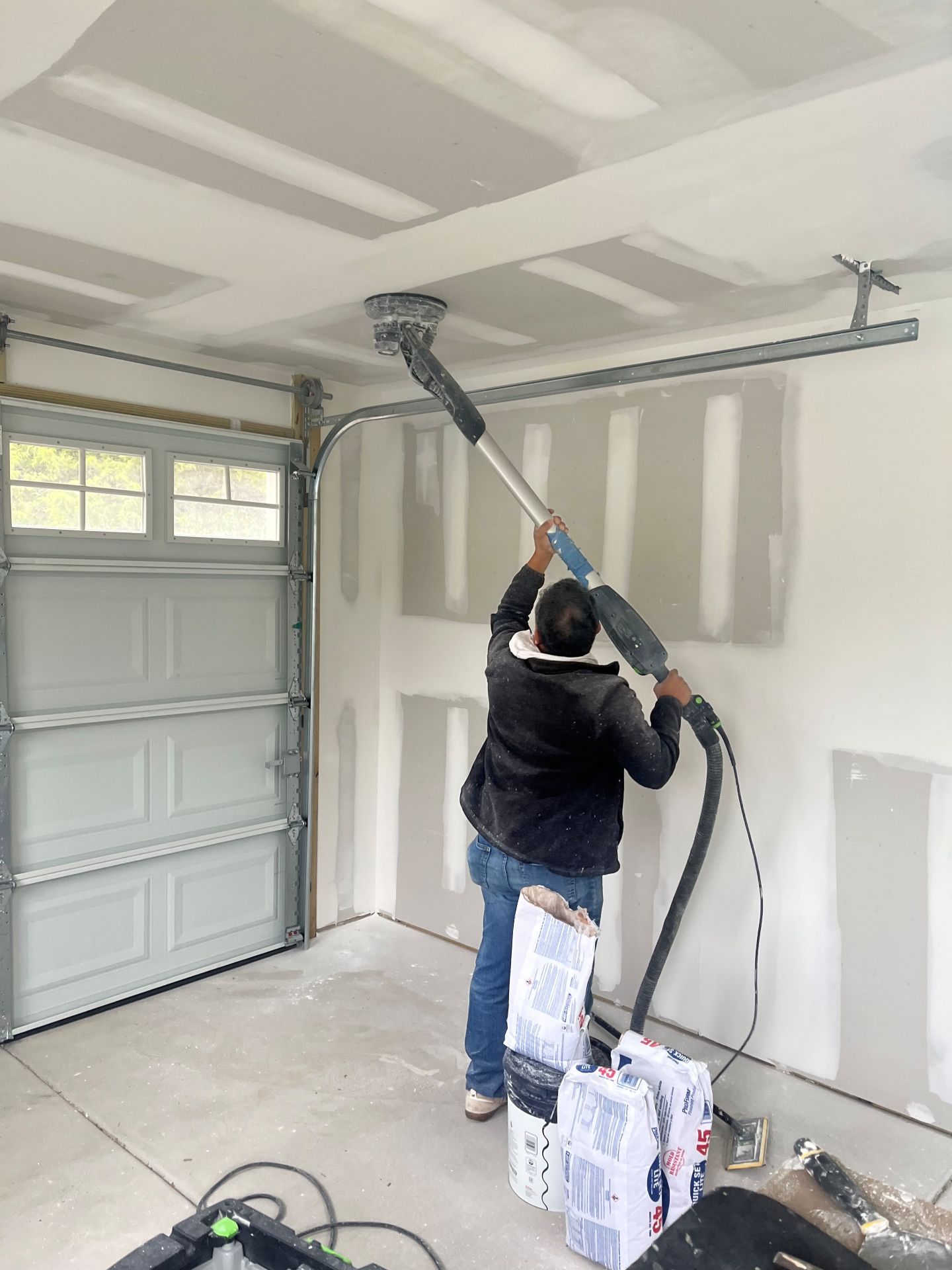
Finishing drywall to a paint-ready surface typically involves applying multiple coats of joint compound—a taping coat that embeds mesh or paper tape over joints, followed by successive topping coats that are feathered out to blend with surrounding panels, and a final skim or sand pass that eliminates surface variation. Texture matching is one of the most technically demanding parts of drywall repair: walls with orange peel, knockdown, or hand-applied texture require matching the existing pattern by eye before paint is applied, and a texture mismatch reads clearly under raking light even if the patch is structurally sound.
After D & B Painting and Drywall completes a repair or installation, the finished surface reads as a single, uninterrupted plane—no visible tape lines, no ridges at patch edges, and texture that matches the surrounding wall under both direct and angled light. Previously damaged areas that showed staining or cracking are covered by properly sealed and primed surface that accepts paint the same way the undamaged wall does.
Drywall projects vary significantly depending on the source of the damage. Water-damaged drywall requires verification that the moisture source is resolved before patching, because new compound applied over a still-wet substrate will fail. Installation for new construction or renovation requires coordination with other trades to ensure electrical, plumbing, and insulation work is complete before boarding begins. Surface preparation—priming after finishing—is included in the scope to ensure paint adheres uniformly across both new and existing wall surfaces.
Answers to Frequent Service Questions
Questions about drywall repair often focus on what causes failures, how to evaluate quality, and what differentiates a repair that holds from one that becomes visible again within a season.
Why do drywall patches become visible again after painting?
Most reappearing patches were not feathered wide enough—compound applied too thickly in a small area creates edges that reflect light differently than surrounding wall, and those ridges become visible once paint dries to a uniform sheen.
How is texture matching handled on repaired sections?
Texture is applied using the same technique used on the original surface—spray application for orange peel, knockdown trowel work for stomp or skip textures—and the match is verified by examining the surface under a side-light before primer is applied.
What causes settling cracks to reopen after repair?
Cracks driven by seasonal soil movement in Raleigh's clay-rich ground typically reopen if only the surface is filled—effective repairs reinforce the joint at the tape level and may require wider compound feathering to distribute any future movement across a larger area.
When does a hole require a full patch panel versus a smaller repair?
Holes smaller than roughly three to four inches can often be repaired with clip-backed or backing-plate patches, while larger openings require a cut-out section with framed backing to provide structural support for the new drywall panel.
How many finish coats are needed to produce a paint-ready surface?
Most properly finished drywall surfaces require at least three compound coats—a taping coat, a filler coat, and a topping coat—with sanding between each, and some installations require an additional skim coat to achieve a perfectly smooth level-five finish.
D & B Painting and Drywall handles the full process from patch to paint-ready surface, so repairs don't require coordinating separate contractors. Call (919) 215-3600 to discuss your drywall repair or installation project and arrange an on-site review.