Walls and Ceilings Done Without Shortcuts
Interior Painting in Raleigh for rooms with faded color, uneven coverage, or surfaces that haven't been updated in years
D & B Painting and Drywall handles interior painting projects across Raleigh, from single-room color changes to complete whole-home repaints. Homeowners typically schedule interior work when walls show scuffs, when color no longer fits the space, or when a previous paint job is peeling or blotching from poor preparation. The difference between a result that holds up and one that fails within a season usually comes down to how well surfaces are prepared before a single drop of paint is applied.
Every interior project begins with surface preparation—filling gaps, sanding rough spots, priming bare patches, and addressing any texture inconsistencies that would telegraph through the final coat. Raleigh's humidity fluctuations throughout the year affect how paint adheres, which means skipping primer on repaired sections or painting over moisture-affected drywall creates adhesion failures that show up months later as bubbling or cracking. Walls and ceilings are assessed separately because ceiling surfaces often require a flat sheen that handles light differently than wall finishes.
Schedule a walkthrough of your space to review surface conditions and discuss finish options before any work begins.
What Proper Interior Painting Requires
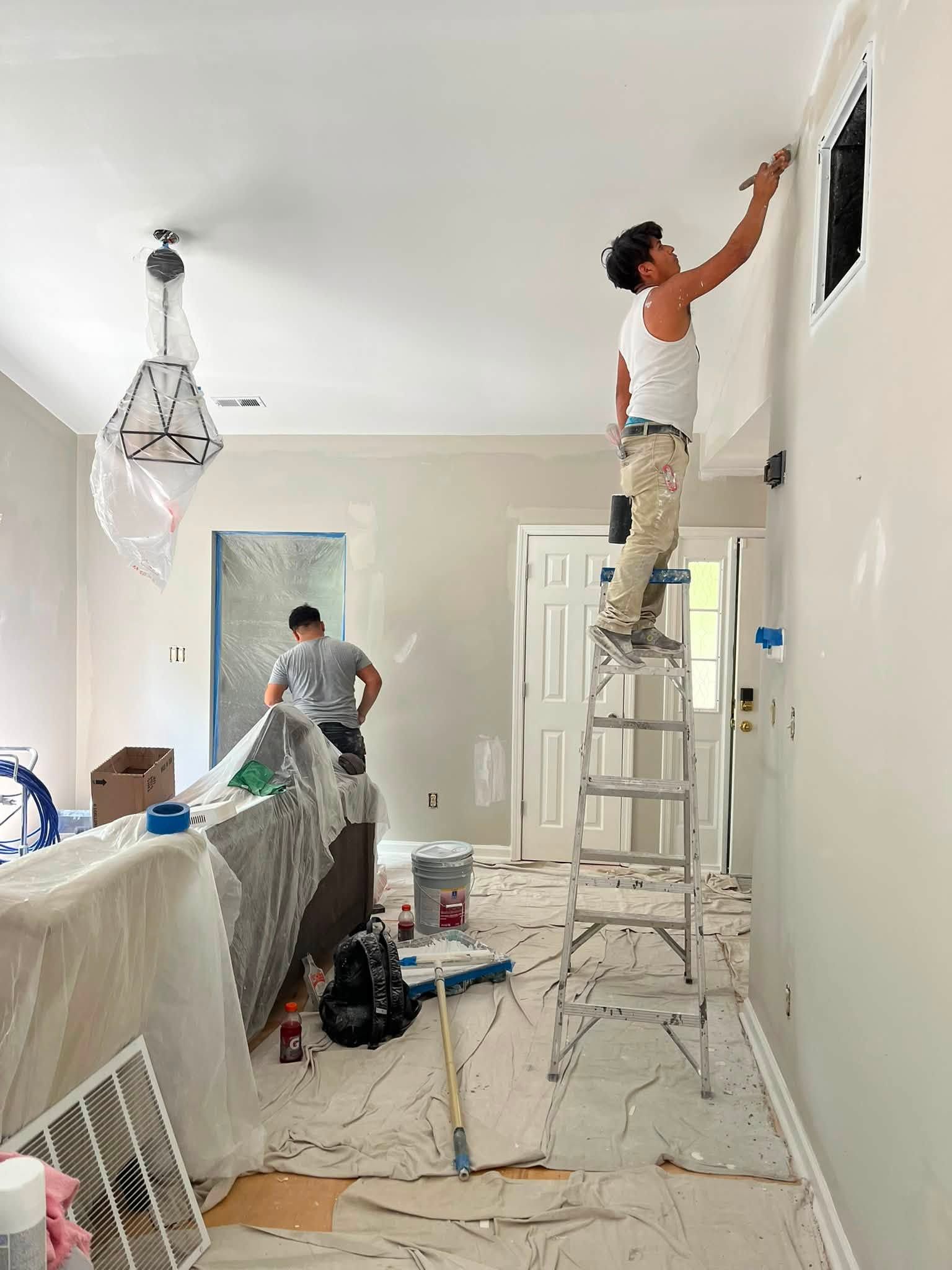
A professional interior finish involves more than applying two coats of color. Each room requires masking of trim, outlets, and adjacent surfaces, followed by systematic application that accounts for drying time between coats. When color changes are significant—going from a dark tone to a light one, or vice versa—additional coats or tinted primer are necessary to prevent the underlying color from bleeding through and creating an uneven final appearance.
Once interior painting is complete, you'll notice clean, consistent coverage without lap marks or streaking, sharp lines where walls meet ceilings and trim, and no visible surface imperfections telegraphing through the finish. Rooms with repaired drywall will blend seamlessly with surrounding walls when the prep work has been done correctly.
The scope of an interior project also affects the approach: painting a single accent wall involves different logistics than a full-room repaint with furniture moving and multiple surfaces. Full-room projects include walls, ceilings, and coordination around fixtures, while partial projects focus only on the specified surfaces. Understanding which surfaces are included—and which are handled separately, like trim and cabinet painting—helps set accurate expectations for the finished result..
Common Questions About Interior Painting
These questions come up often when homeowners are planning an interior painting project, particularly around preparation, timing, and what to expect during the process.
What does surface preparation actually involve before painting?
Preparation includes cleaning walls, sanding rough or glossy areas so new paint adheres, filling nail holes and cracks with appropriate filler, and applying primer to bare or repaired spots—skipping any of these steps produces visible failures within months.
How many coats are typically needed for a color change?
Most significant color changes require a minimum of two finish coats, and switching from a dark to a light color often benefits from a tinted primer coat first to neutralize the existing tone.
When is the best time to schedule interior painting in Raleigh?
Interior painting can be done year-round, though Raleigh's humid summers can extend drying times slightly, making spring and fall ideal for projects that involve open windows for ventilation.
Why do some painted walls show brush marks or roller texture?
Visible texture in the final coat usually indicates the wrong paint viscosity for the surface, inadequate surface leveling beforehand, or application in conditions where the paint dried too quickly to self-level.
What finish sheen is appropriate for different rooms?
Flat and matte finishes work well for ceilings and low-traffic areas, while eggshell and satin hold up better in kitchens, bathrooms, and hallways where surfaces need occasional cleaning.
D & B Painting and Drywall is available to walk through your interior project, assess current surface conditions, and provide an estimate based on the specific rooms and finishes involved. Call (919) 215-3600 to arrange a consultation.