
Whole-Home Renovation Done Right
Home Remodeling in Raleigh for properties showing outdated layouts, deteriorating finishes, or surfaces that no longer function as intended
D & B Painting and Drywall handles whole-home remodeling for homeowners in Raleigh who are dealing with spaces that have aged past the point of simple repairs. These are properties where multiple rooms need coordinated attention—not just a coat of paint, but structural updates, new surfaces, and interior renovations that address how the home actually functions day to day. The work spans interior renovations, custom remodeling projects, and home updates that bring older spaces into alignment with how people actually live in them.
Whole-home remodeling involves sequencing work across trades—drywall, painting, carpentry, and finish work—in a specific order so that earlier stages don't interfere with later ones. In the Triangle Area, homes built during the rapid growth periods of the 1980s and 1990s often feature original drywall, dated trim profiles, and builder-grade finishes that are now showing consistent wear. A full interior renovation typically begins with surface assessment and demolition of compromised materials before any new work is installed. Decisions made at that stage—about whether existing framing can support new layouts or whether moisture has affected wall cavities—determine the scope and approach for everything that follows.
Request an on-site walkthrough to review the current condition of your home and identify which areas require structural attention versus cosmetic updates.
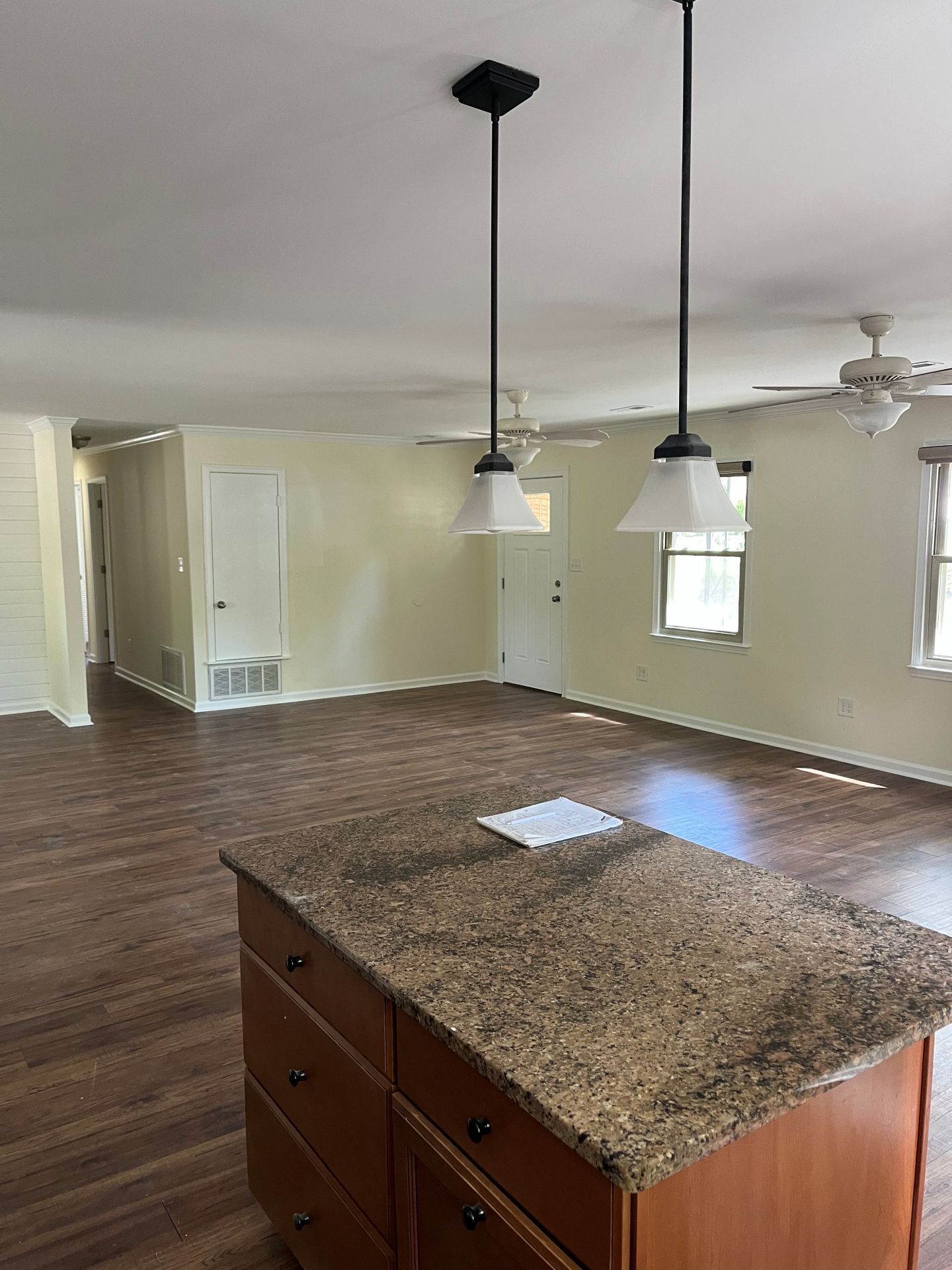
What a Complete Remodel Actually Involves
Residential renovation services at this scale require coordinating multiple surface types and finish materials across rooms that all need to function together visually and structurally when the work is done. During the process, walls are assessed for damage or inconsistency before new drywall or plaster is applied, and paint selections are matched to lighting conditions and room function rather than applied uniformly. Custom remodeling projects differ from standard renovation in that they require planning specific to the home's existing layout rather than defaulting to stock configurations.
After a whole-home remodel, the most immediate observable changes are surface consistency—walls with no visible patching ridges or texture mismatches, trim that meets corners cleanly, and paint finishes that hold an even sheen without lap marks or roller texture. Rooms that previously felt disconnected in style or condition read as intentional and cohesive. Functional improvements like updated layouts or reconfigured rooms become apparent in how the space moves and how natural light distributes through it.
The scope of a whole-home project also affects which elements are included versus what falls outside the renovation's boundaries. Structural work, mechanical systems, and electrical updates are typically handled by licensed specialty trades working alongside the renovation crew, while drywall, painting, carpentry, and finish installation remain within D & B Painting and Drywall's direct scope. Clarifying those boundaries early prevents gaps or overlapping work that creates scheduling delays mid-project.
Common Questions About This Service
Homeowners planning a full renovation often have questions about sequencing, material selection, and what to expect during the work itself. The answers below address the most consistent points of confusion before a project begins.
What order does the work happen in during a whole-home remodel?
Demolition and structural corrections happen first, followed by drywall installation and finishing, then painting and trim work, with final detail carpentry and touch-up completed last to protect finished surfaces from earlier-stage damage.
How does the Triangle Area climate affect interior renovation materials?
Raleigh's humidity levels, particularly during summer months, affect how drywall compound cures and how paint adheres—work scheduled during high-humidity periods requires adjusted drying times and may require climate control inside the home to maintain consistent conditions.
Why does the scope of a whole-home project vary so much between estimates?
Scope differences come down to existing conditions: homes with original 1980s drywall may require full replacement rather than skim coating, while properties that have had previous renovation work may have mixed materials that need to be reconciled before new finishes are applied.
What should I look for to evaluate whether finish work has been done correctly?
Properly finished drywall shows no visible seams, fastener dimples, or texture variation under raking light—running a lamp at a low angle across a wall surface reveals imperfections that wouldn't be visible under overhead lighting.
When is the right time to schedule a whole-home remodel?
Projects that involve multiple rooms benefit from being scheduled during periods when you can vacate or limit use of affected spaces—coordinating around school schedules or planned travel reduces disruption and allows work to proceed without stopping between rooms.
D & B Painting and Drywall works with homeowners across Raleigh to plan renovations based on actual property conditions rather than assumptions. Arrange a detailed consultation to discuss which phases of your home need attention and how the work will be sequenced to protect completed areas while the project moves forward.