Siding and Trim Built to Outlast Weather
Exterior Painting in Raleigh for homes with peeling siding, faded color, or surfaces showing weather damage
Peeling paint on exterior siding is rarely just a cosmetic issue—once the paint film breaks down, moisture penetrates the substrate and begins working against the wood or composite material beneath. D & B Painting and Drywall provides complete exterior painting projects in Raleigh, including walls, siding, trim, and detail work, with preparation processes suited to the region's pattern of wet springs and high summer humidity. Surfaces left without a sound protective coating develop wood rot, mold infiltration, and substrate damage that escalates repair costs significantly over time.
Before any coating is applied, exterior surfaces are cleaned, scraped, sanded, and primed where bare wood or damaged areas are exposed. Raleigh's climate creates specific challenges for exterior coatings: high humidity in summer can trap moisture beneath paint applied too early in the morning, and UV exposure from long warm seasons fades lower-quality finishes faster than high-build protective coatings. Properly applied exterior paint forms a continuous film that sheds water rather than absorbing it, and trim details receive particular attention because end grain and tight corners are where moisture typically enters first.
Arrange an on-site evaluation to review the current condition of your siding and trim before selecting a coating approach.
How Exterior Painting Addresses Weather Exposure
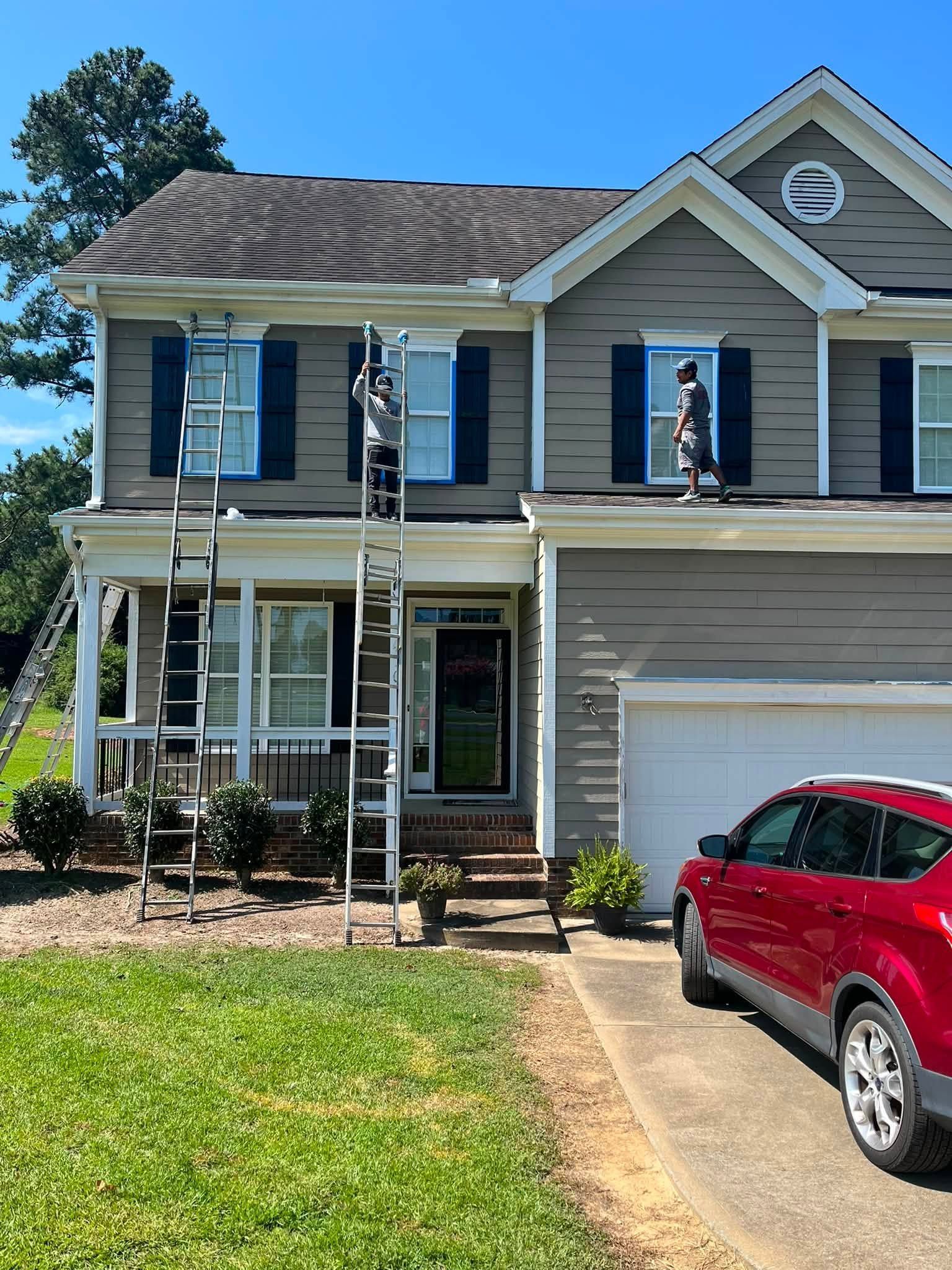
Exterior painting involves a different set of decisions than interior work because every surface faces ongoing UV radiation, rain, temperature swings, and biological growth like mildew. Surface preparation is the most labor-intensive phase—cleaning to remove mildew and chalking, scraping loose material, and spot-priming exposed substrate—because a new topcoat applied over a compromised surface will fail at the same rate as the old one beneath it. Protective coatings are selected based on substrate type: the product appropriate for fiber cement siding differs from what's used on raw wood or previously painted masonry.
After an exterior painting project is completed by D & B Painting and Drywall, the visible change is immediate—consistent color with no fading patches, clean lines on trim and detail work, and surfaces that shed water visibly rather than absorbing it. The areas most prone to early failure, like window and door trim, corner boards, and soffit edges, should show uniform coverage with no gaps at caulked joints.
Exterior projects also include decisions about caulking: open joints around trim, windows, and penetrations allow water infiltration and need to be sealed before painting to maintain the integrity of the paint film. Some surfaces—particularly weathered or previously unpainted wood—require full prime coats rather than self-priming topcoats to achieve adequate adhesion. These variables are assessed during the initial evaluation and factored into the project scope.
What Property Owners Usually Ask
Exterior painting questions tend to focus on timing, product performance, and what to expect during preparation, particularly for homes in areas with significant seasonal weather variation like Raleigh.
Why does exterior paint peel even when the color still looks intact?
Peeling usually originates from moisture trapped beneath the film or poor adhesion to a glossy or contaminated surface—the color may remain but the bond to the substrate has failed, which eventually causes the film to lift.
How is mildew handled before painting begins?
Mildew must be treated with an appropriate cleaning solution and fully removed before any coating is applied, because painting over active mildew simply traps it and allows it to continue growing beneath the new finish.
What makes exterior trim painting more demanding than siding?
Trim involves more edges, end grain, transitions, and tight corners where brushwork must be precise, and these areas typically require more coats because they absorb more product and take more direct moisture exposure.
When should exterior painting be scheduled in Raleigh?
Exterior painting performs best when applied in moderate temperatures and low humidity—in Raleigh, late spring and early fall offer the most consistent conditions, avoiding both mid-summer humidity peaks and winter temperature drops.
How do protective coatings differ from standard exterior paint?
Protective coatings are formulated with higher solids content and better UV resistance, making them appropriate for surfaces with high sun exposure or prior history of early failure, though the right product depends on the specific substrate material.
D & B Painting and Drywall can assess your home's exterior surfaces and outline what preparation and coating work is needed for a lasting result. Call (919) 215-3600 to set up a time for an estimate.